
Resilient Futures Co-Lab Announces 22 Microgrant Recipients Across North Carolina, Signaling Pipeline for Regenerative Regional Investment
- resilientfuturesco4
- Apr 7
- 6 min read

Resilient Futures Co-Lab announced 22 microgrant recipients across North Carolina, marking the first phase of capital deployment in a broader effort to build a regenerative, resilient regional economy.


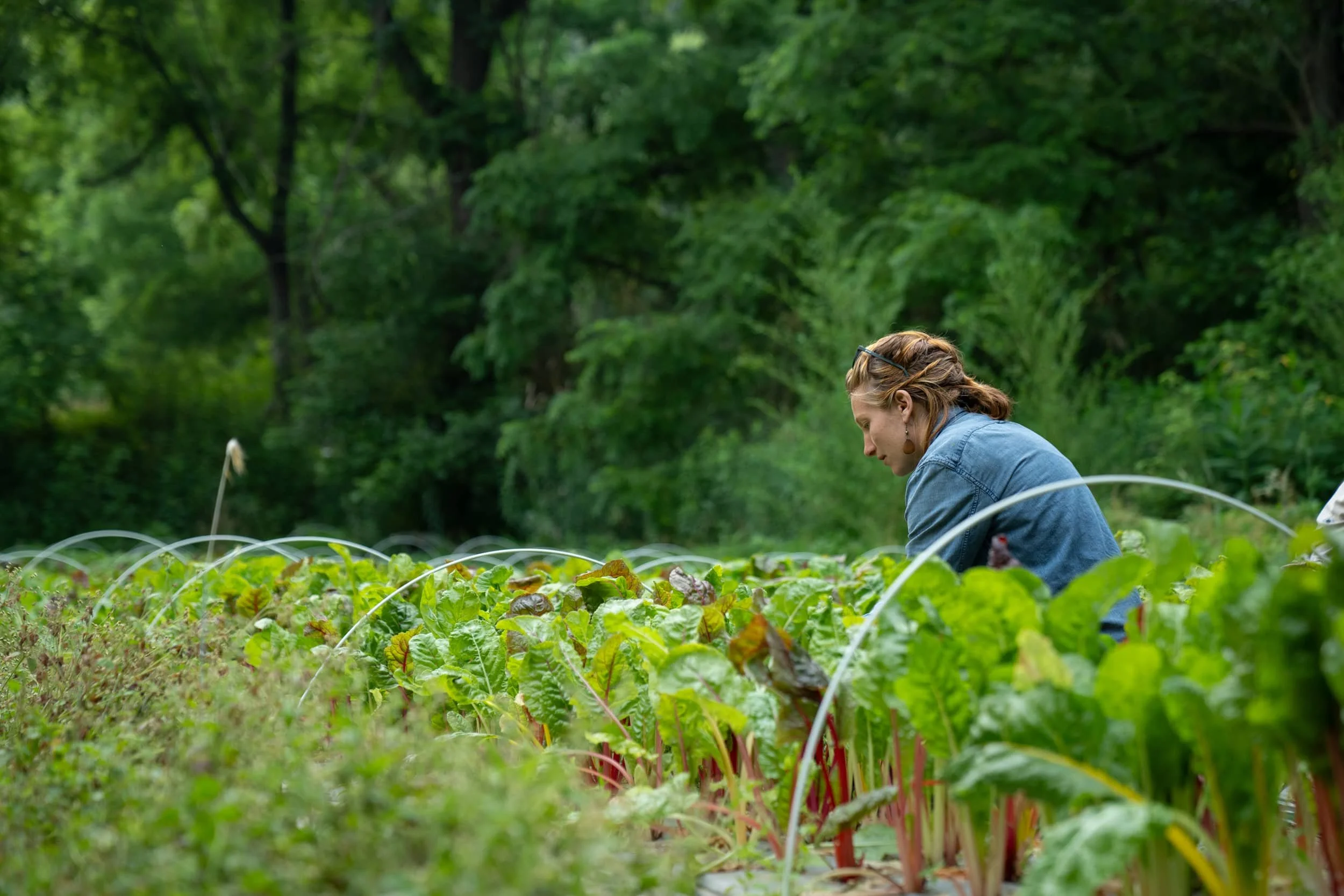


The microgrant program represents an early-stage investment strategy designed to surface fundable opportunities, build relationships across sectors, and generate real-time intelligence about emerging economic activity across the region. These microgrants function as a pipeline-building mechanism revealing where capital can be deployed next and what conditions are required to support long-term, systems-level change in the region.
The program received over 100 applications spanning food systems, circular materials, housing, land stewardship, and community governance demonstrating both the depth of activity already underway and the current gap between available capital and locally rooted initiatives ready to grow.

“We're delighted to provide initial support to this remarkable cohort of 22 initiatives — who together represent just the tip of the iceberg of initiatives across the region working toward stronger local food systems, a more circular economy, community health and prosperity, and stable living conditions,” said Eva Gladek, CEO and Founder of Metabolic, a founding partner of the Co-Lab. “What excites us most is how much opportunity exists to interconnect and reinforce these efforts, and we look forward to structuring larger, coordinated capital deployments that can help this ecosystem scale what it is already building.”
The microgrant program is the first of three capital deployment stages, to be followed by a catalytic capital layer and a blended finance vehicle aimed at scaling clusters of interconnected initiatives across North Carolina.

“This was a strong applicant pool,” said Jennifer Germaine, Director of Finance at Blueprint for Impact and a founding partner of the Co-Lab. “What stood out immediately is that circular, regenerative, and community-rooted economic models are already happening across North Carolina. These microgrants allowed us to begin building relationships with the people leading that work. We’re looking forward to continuing to connect these efforts and build a more coordinated ecosystem across the state.”
The 2026 cohort includes 22 initiatives working across multiple sectors and geographies. Each represents an early signal of the broader transition underway:

Rada Foundation Inc. (RAD Studios) — Creates affordable studio space for artists and makers, strengthening the region’s creative economy and cultural infrastructure. This grant supports RAD Studios, which currently supports 12+ working artists displaced from the River Arts District and showcases their work.

Stony Knob Farm — Revitalizes a working farm through regenerative practices and infrastructure investment to support long-term agricultural resilience. This grant supports on-farm cold storage powered by solar energy – infrastructure that can be replicated on other farms in the region.

Mainspring Conservation Trust (WNC Wildseed Library) — Preserves and distributes native plant seeds to support biodiversity, ecological restoration, and community education. This grant supports the Wildseed Library, which empowers residents to practice "micro-conservation" with locally sourced wild seeds.

WNC Food Coalition — Builds coordination across the regional food system to improve efficiency, access, and resilience from production to distribution. This grant supports an institutional buying network to shift procurement from national distributors toward local food, starting with anchor institutions in healthcare and local government.

WNC From the Ground Up (Nourished Jackson) — Expands community-led food access and education efforts to strengthen local food systems in Jackson County. This grant supports Nourished Jackson, which operates a food-as-medicine program, delivering locally sourced food from 40+ local farms to patients referred by healthcare providers.

Crown Town Compost — Scales community composting infrastructure to reduce food waste and return nutrients to local soils. The Residential Co-Op Pilot places shared, app-monitored collection bins in neighborhoods, lowering cost and emissions compared to individual curbside pickup.

Transplanting Traditions Community Farm — Trains and supports immigrant and refugee farmers while increasing access to culturally relevant, locally grown food. This grant supports the Seeds of Migration Producer Hub, which provides shared accounting, logistics, and infrastructure so that farms can focus on their core business.

UpCycle Fiber Inc. — Transforms textile waste into building insulation, advancing circular materials and sustainable housing solutions. This grant advances material formulation, testing, and certification for an insulation product made from post-consumer textiles that can’t be reused through other methods.

RiverLink (River Cane Restoration Project) — Restores native river cane ecosystems to strengthen biodiversity, watershed health, and cultural heritage. This grant supports an initiative that develops a network of growers to propagate river cane at a larger scale, combining smart economics with sound science.

Bounty & Soul (Rooted Resilience) — Expands equitable food access while supporting local farmers through community-based distribution networks. Grant funding supports cold storage, shared tools, seed and fertilizer inputs, and seedling production for the farms and gardens supplying no-cost community markets.
Hospitality House of Northwest NC — Provides critical housing and support services to increase stability for individuals and families experiencing homelessness. This grant supports an initiative that surveys residents across seven counties on transportation barriers and local food access.

HERS LLC — Advances community-based programming that expands access, opportunity, and economic empowerment for underserved populations. This grant supports Community Health Workers who help people navigate healthcare services, housing support, and key resources while building more sustainable systems for equitable care.

NEST (Neighborhood Environmental Stewardship Team) — Engages residents in hands-on environmental stewardship to improve local ecosystems and community resilience. This grant supports phase 2 of their food waste diversion program – which collected 10+ tons from 160 households – to add smart-bin enclosures with app access and fill-level monitoring to improve efficiencies and lower the barrier to entry.

Utopian Seed Project — Develops regional seed processing infrastructure to increase seed sovereignty and support climate-adapted agriculture. This grant funds the initial stages of an off-grid construction for seed cleaning, drying, and storage.

Blue Ridge Women in Agriculture (Farm to ECE) —Connects local farms to early childhood education centers to improve food access and strengthen local markets. Purchasing flows through the High Country Food Hub, creating a new institutional market channel for small farmers while diversifying children's diets.

Blue Ridge Foodshed Commons (Foodshed Cultivator) — Launches and supports food system enterprises through an incubator model focused on regional resilience. The first cohort brings 4-6 regional food hubs together for 6+ months to co-develop diversified revenue streams from mission aligned activities.

Watauga Community Housing Trust — Develops permanently affordable housing through community land stewardship to ensure long-term access and stability. Having completed its first 99-year ground lease home sale, this grant funds a campaign to build coalition and financing partnerships needed to replicate the model for additional housing.

Charlotte Super Fab Lab — Expands access to fabrication tools and circular production systems to enable community-driven innovation. This project investigates low-cost methods for grinding consumer plastic waste into feedstock for expanding the regions ability to 3D print with recycled plastics.

Mechanism — Collaborates with communities and manufacturers to foster local production ecosystems that increase resilience, vitality, and well-being. This initiative maps food and beverage production capacity, contract manufacturers, and underutilized processing spaces across 25 counties in Western North Carolina.

Uncle Zev’s Kudzu Bitters — Transforms invasive kudzu into a value-added product, turning an ecological challenge into economic opportunity. The grant will help establish a stronger organizational structure and expand the product range.

Seed2Shirt LLC — Develops a regional fiber-to-fashion system that reconnects agriculture and manufacturing through circular textile production. In partnership with Gaston College, this initiative will explore refining blended yarns from recycled waste and regeneratively grown NC cotton alongside an expanded textile curriculum
Protea Design LLC (Circulocity) — Explores circular economy opportunities to reduce waste and build local systems for material reuse. This feasibility study assesses spatial planning, infrastructure, and renovation costs to expand the Innovation Barn in Charlotte so that it can incubate more regional initiatives.
About Resilient Futures Co-Lab
Resilient Futures Co-Lab is a place-based initiative focused on strengthening the foundations of local economies to support the realization of resilience outcomes across the Mountain and Piedmont counties of North Carolina. It works by bringing capital, relationships, and long-term support into alignment around real needs on the ground. Its focus is not on one-off projects, but on how clusters of initiatives, working across different layers of a system, can reinforce one another to unlock durable change. Read more about Resilient Futures Co-Lab at resilientfuturescolab.org.
Media Contact
Jennifer Germaine
Founding Partner of the of Resilient Futures Co-Lab
Comments